

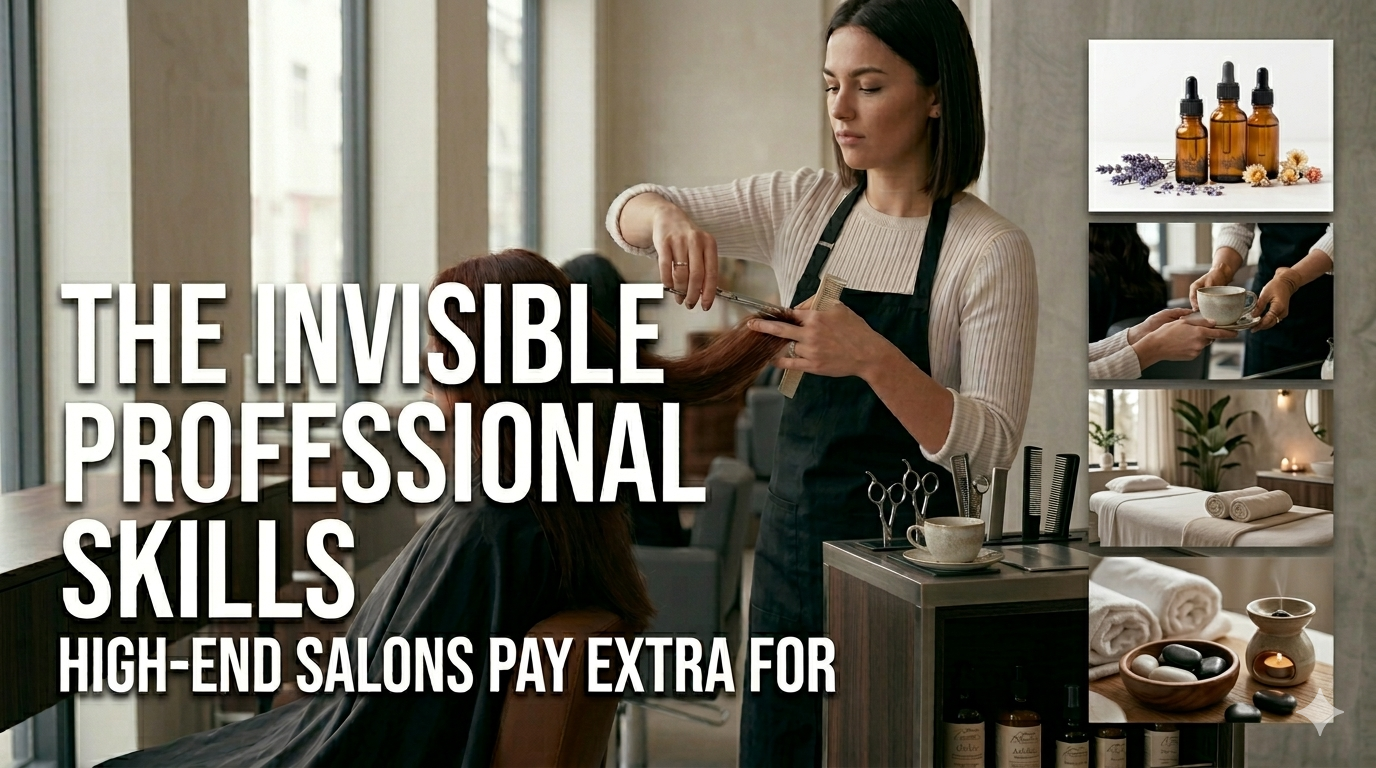
The ‘Invisible’ Professional Skills High-End Salons Pay Extra For
The high-end salon industry is built on a hidden paradox. While beauty school teaches you the geometry of a haircut and the chemistry of color, your technical certificate is merely your entry ticket. To the owners of elite establishments, technical proficiency is assumed; it is the “invisible” skills that determine your actual value.
Professionalism is the highest form of currency in a luxury environment. When an owner looks at a busy floor, they aren’t just looking for great highlights. They are looking for the stylist who manages their time with surgical precision and treats every client interaction as a high-stakes consultation.
Mastering the art of anticipatory service sets you apart instantly. Most stylists wait to be told what to do or wait for the client to lead the conversation. The elite professional anticipates the need—whether it’s a glass of water, a product recommendation before the client asks, or a pre-booked appointment that secures the client’s next twelve months.
Emotional intelligence is the engine of client retention. You are not just selling a service; you are managing an experience. Stylists who can read the room, maintain a grounded energy during a chaotic Saturday, and practice active listening find their books filled months in advance.
The math of punctuality and presence cannot be ignored. In a high-overhead environment, every minute is a financial metric. Being “ready” at 8:55 AM for a 9:00 AM guest is a skill that signals respect for the salon’s brand and the client’s time, making you a low-maintenance, high-return asset for any owner.
THE MENTOR MOMENT: Why Your Reputation is a Business Strategy
In this industry, we often talk about “vibe,” but from a mentor’s perspective, your vibe is actually your Professional Reputation. High-end owners pay a premium for stylists who are “management-free.” This means you don’t bring personal drama to the floor, you adhere to the dress code without being asked, and you treat the salon’s tools and reputation as if they were your own.
When you transition from a “worker” mindset to an “owner” mindset, your income follows. Start looking at the salon not as a place that gives you a paycheck, but as a platform that you support with your professionalism. The more you reduce friction for the owner, the more they will invest in your growth, your education, and your chair.
PRO-TIP: Treat every new client as an audition for the future. Your goal isn’t just to do their hair today, but to use your professional soft skills to ensure their next three appointments are in your book before they reach the front desk.